Objective
Build a stairway of 5, 6 or 7 works from the same category (Painting or Architecture) in strict chronological order. Whoever gets there first wins.
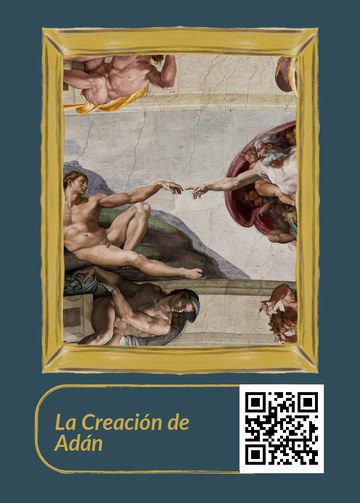
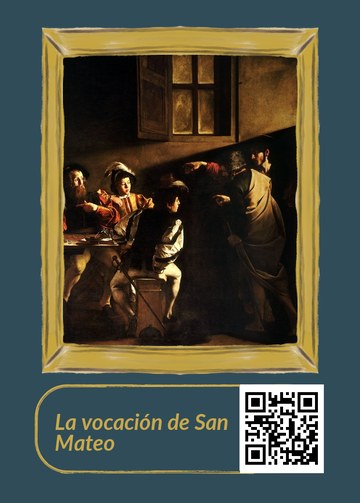
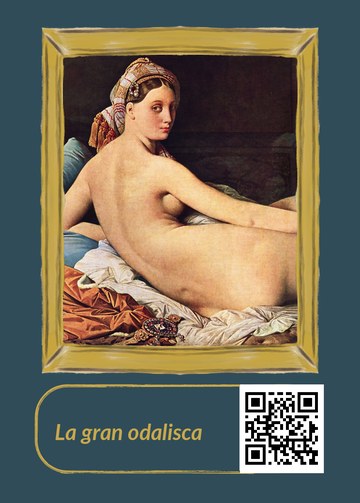
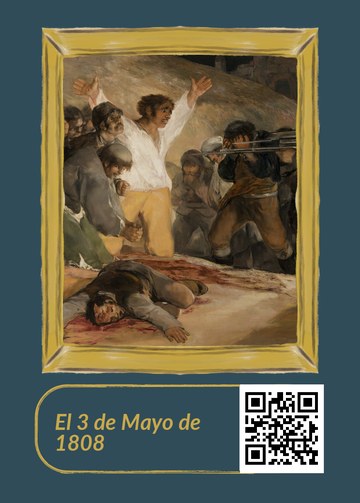
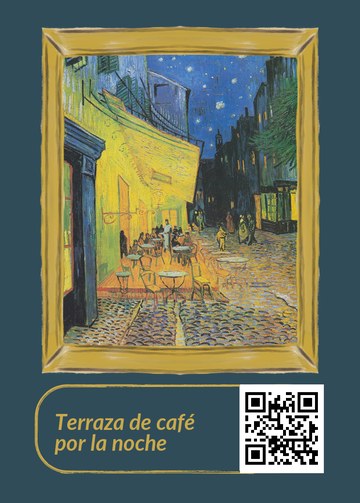
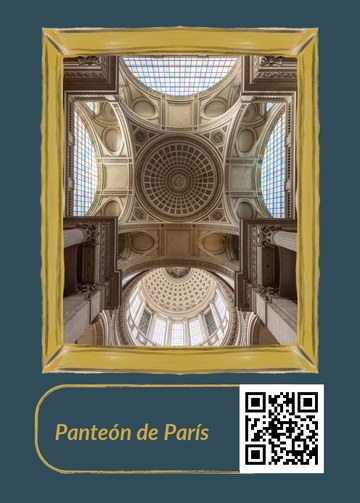
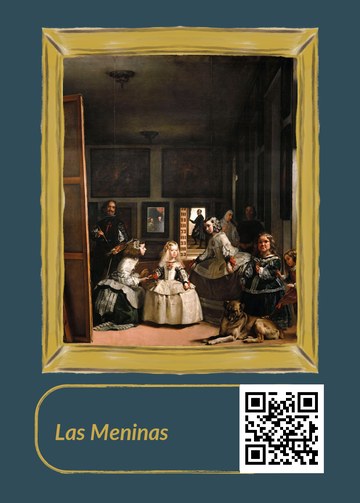
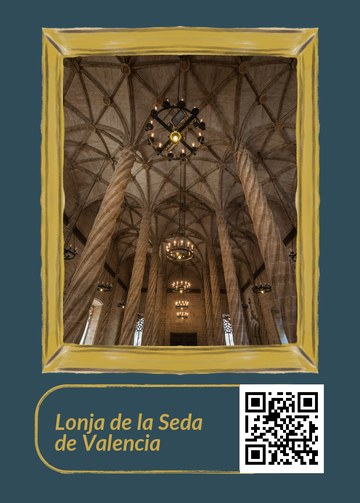
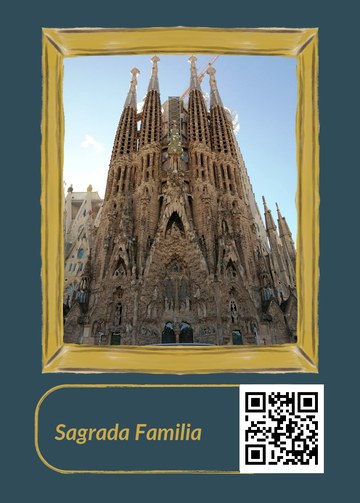
The cards only show the image and the title: no artist, no date, no style. You have to recognise the movement by looking at the work.
Components
| Card type | How many |
|---|---|
| Single-style works | 100 |
| Bridge works (between two consecutive styles) | 3 |
| Special cards (17 types) | 49 |
| Base deck | 152 cards |
| Help cards (double sided: Painting / Architecture) | 8 (4 pairs) |
| Quick guide (double sided: the turn / how you win) | 1 |
| Glossary (double sided: the words in the clues) | 1 |
| Total in the box | 162 cards |
The basics
| Term | What it means |
|---|---|
| Hand | Your cards, kept secret. Max 5 at the end of your turn. |
| Table | Your face-up cards. Max 7 at the end of your turn. They can be out of order and mixed up: it only matters when you win. |
| Deck | Face-down pile everyone draws from. |
| Discard pile | Face-up public pile. |
General rule: cards on the table do not go back to your hand. You can only keep them, discard them or replace them. A few special cards break this rule.
Setup
- Shuffle the whole deck (works and specials mixed together).
- Deal 5 cards to each player.
- The youngest player starts (or whoever saw an exhibition most recently). Play goes clockwise.
The turn
Every turn has 4 steps, in order:
1. Draw
Take 1 card from the deck. If you draw a card that resolves the moment you draw it (a trap, like This Was Made with AI), resolve it right there.
2. Play to the table
Put as many works from your hand onto your table as you like. No restrictions: any order, any category, repeats if you want. You can also rearrange your table or discard cards you already have down, including blocked ones (the special card stuck to them is discarded with them).
3. Play special cards
If you want, play special cards from your hand; it is not compulsory. Each one resolves its effect and goes to the discard pile (except the ones that stick to another card).
4. End your turn
If you have more than 5 cards in hand or more than 7 cards on the table, discard until you are inside the limits.
Any card removed or discarded goes to the public discard pile, never to a hand.
Pace: about 30 seconds per turn
The turn has to keep moving. As a guide, 30 seconds per person is a good pace. It is not a strict rule: some turns will be trickier (negotiations, chains of special cards), but the whole table has a better game if everyone keeps their turn short. If someone is taking too long thinking, the others can remind them of the pace without any drama.
Negotiations with Art Dealer can fairly stretch a turn, and the 30 seconds do not count against you while you are closing a swap.
How you win
After you end your turn you can declare victory if your table holds a valid stairway:
- 5/6/7 cards, depending on the mode.
- All from the same category (Painting or Architecture).
- In strict chronological order: each one from the style immediately after the one before it (n+1).
Your table does not have to be tidy or trimmed: when you declare, you point at the 5/6/7 cards of your stairway and only those are checked.
Two kinds of wildcard
- Bridge cards: they belong to two consecutive styles. You choose which one counts when the stairway is checked.
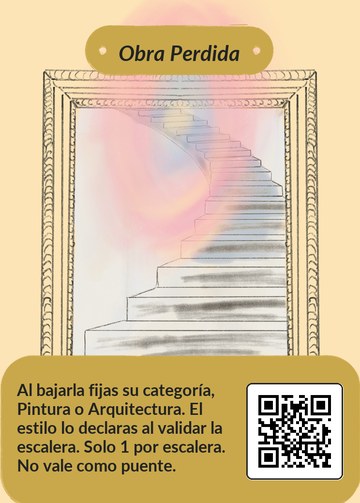
- Lost Work (special): a wildcard. When you play it to your table you say its category (Painting or Architecture), and it cannot change afterwards; you declare the style it counts as when the stairway is checked. Only one per stairway.
Examples
- ✅ Valid (Beginner, Painting): styles 5 → 6 → 7 → 8 → 9
- ✅ With Lost Work: 5 → 6 → [wildcard=7] → 8 → 9
- ❌ Invalid: 5 → 6 → 9 (gaps are not allowed)
- ❌ Invalid: mixing painting and architecture
If the stairway is valid (OK)
You keep only the 5/6/7 cards of the stairway on your table (plus Lost Work if you used it). Everything else goes to the discard pile. You have won!
If the stairway fails (NOK)
You lose 2 cards from the stairway you were trying to validate, your choice. They go to the bottom of the public discard pile. The punishment is harsh: only declare victory when you are very sure.
If the deck runs out
The first time the deck runs out, shuffle the discard pile and build a new deck. If the deck runs out a second time, the game ends. The winner is whoever has the longest valid stairway on the table. On a tie, the most recent one wins (the more modern styles).
Special card effects
Special cards act on works on the table, in a hand or in the stairway itself. These are the possible effects:
| Effect | Cards | Result |
|---|---|---|
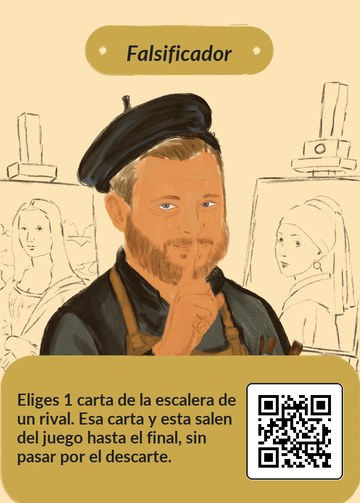
| Removes | Forger, British Museum, The Freemason | The work leaves the table (out of the game, or into the attacker’s hand). |
| Attacks the hand | The Art Critic | You look at an opponent’s hand and send 1 card to the public discard pile. |
| Targeted theft | Museum Heist | You steal 1 work from an opponent’s table; they can discard 2 cards from their hand to report you and block the theft. If they do not defend, the work goes to your hand. |
| Swaps | Art Dealer | Free negotiated swap: any category, any number of cards. The opponent decides whether to accept. |
| Blocks | Cancelled Artist, Self-Taught Restorer | The work stays on the table but does not count towards winning. The special card stays on the table, stuck to the work it hits. |
| Frees | Restorer, Historical Context | Lifts a block. The card counts again. |
| Global disruption | Iconoclasm | Every player (including whoever played it) discards 1 card from their table, their choice. |
| Makes immune | UNESCO World Heritage | The protected card is immune to Removes, Theft, Blocks and Iconoclasm. UNESCO does not count as an extra card (the limit of 7 still applies). |
| Trap | This Was Made with AI | A card that penalises you when you draw it from the deck: discard 1 Painting work from your table. The ones in your hand are safe. |
Who frees what: Cancelled Artist is only lifted by Historical Context. Self-Taught Restorer only by Restorer.
Reactive defence. Historical Context has a second use: when any player (even you) plays Iconoclasm, you can play Historical Context at that moment and your card is not discarded. Everyone else still discards. That allows fair plays where you throw Iconoclasm knowing you hold Historical Context, and only the others lose cards.
Voluntary discard. The owner can discard their own card in their Phase 2 even if it is blocked. The attacking card (Cancelled Artist / Self-Taught Restorer) is discarded as well.
Other specials. Some cards do not attack particular works, so they are not on the list above: Patron (when you draw, take 3 cards from the deck instead of 1), Auction (bid for an opponent’s card with cards from your hand), Lost Work (wildcard in your stairway), Carbon-14 (check the style of one of your cards on your phone). Each one has its effect spelled out on its own page of the manual.
The website during a game
No phones during the game, with three exceptions:
- Carbon-14. When you play it you scan the QR of any work in the game (your hand, an opponent’s table or the discard pile) and read its page. Only you see the screen.
- Checking a special. If you play a restricted card (Cancelled Artist, British Museum, The Freemason…) against a particular work, your opponents can ask you to check it: photograph both QRs (the special and the work) and the website answers OK / NOK.
- Checking the win. When you declare a stairway, your opponents can ask for proof: photograph your 5/6/7 cards (with Lost Work if you used it) and get OK / NOK.
Penalty on a NOK
- Special NOK → you lose the special card. It goes to the discard pile with no effect.
- Stairway NOK → you lose 2 cards from your stairway, your choice. They go to the bottom of the discard pile.
After the game: use the website as much as you like to check stairways, read the pages and go over whatever you did not know.
The idea behind the game
No artist, no date, no style on the card: you learn to look at the work itself (palette, composition, materials, symbols, brushwork or floor plan). The title is a clue, not the answer. And because the same works come back game after game, you end up recognising them without trying. No studying.