
How it works
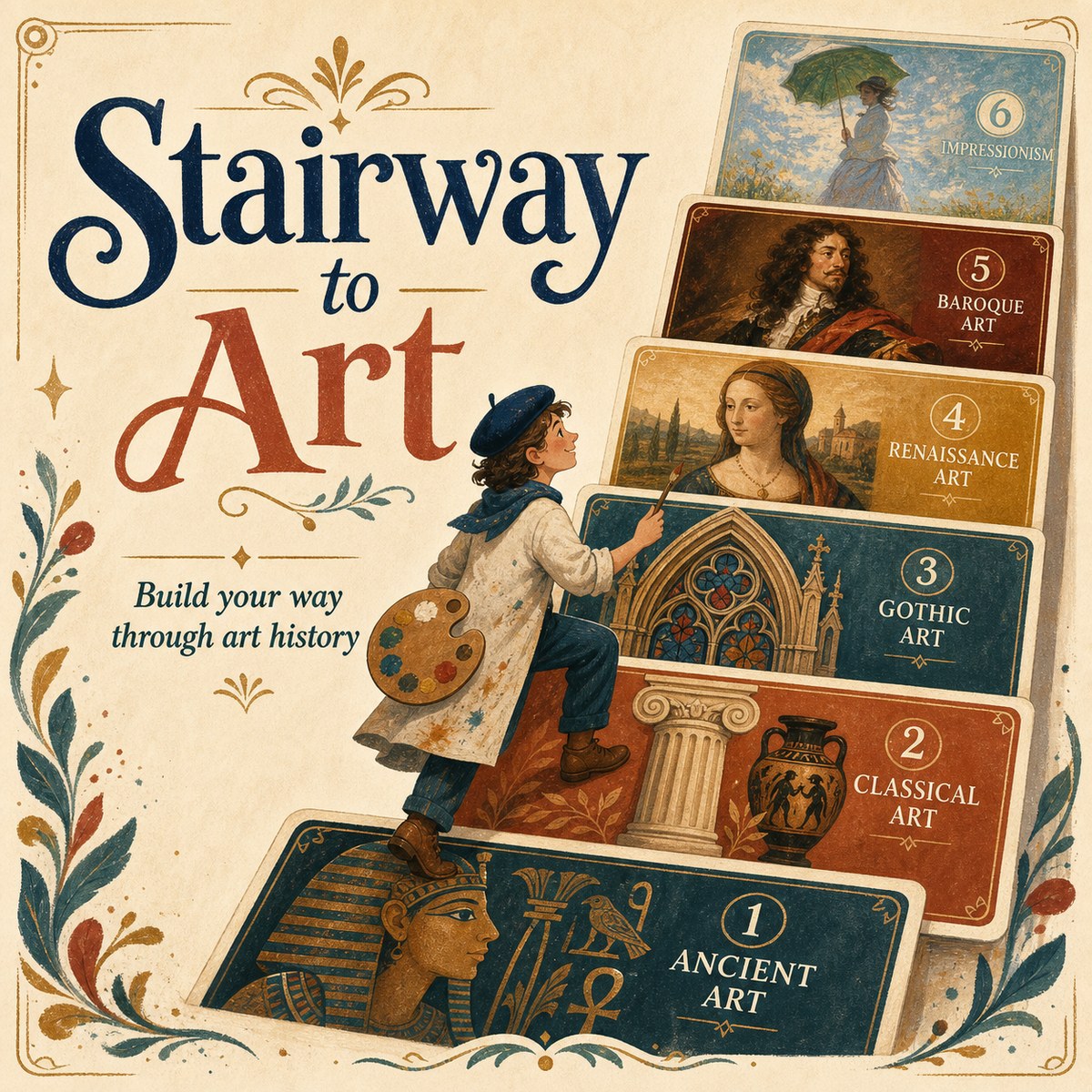
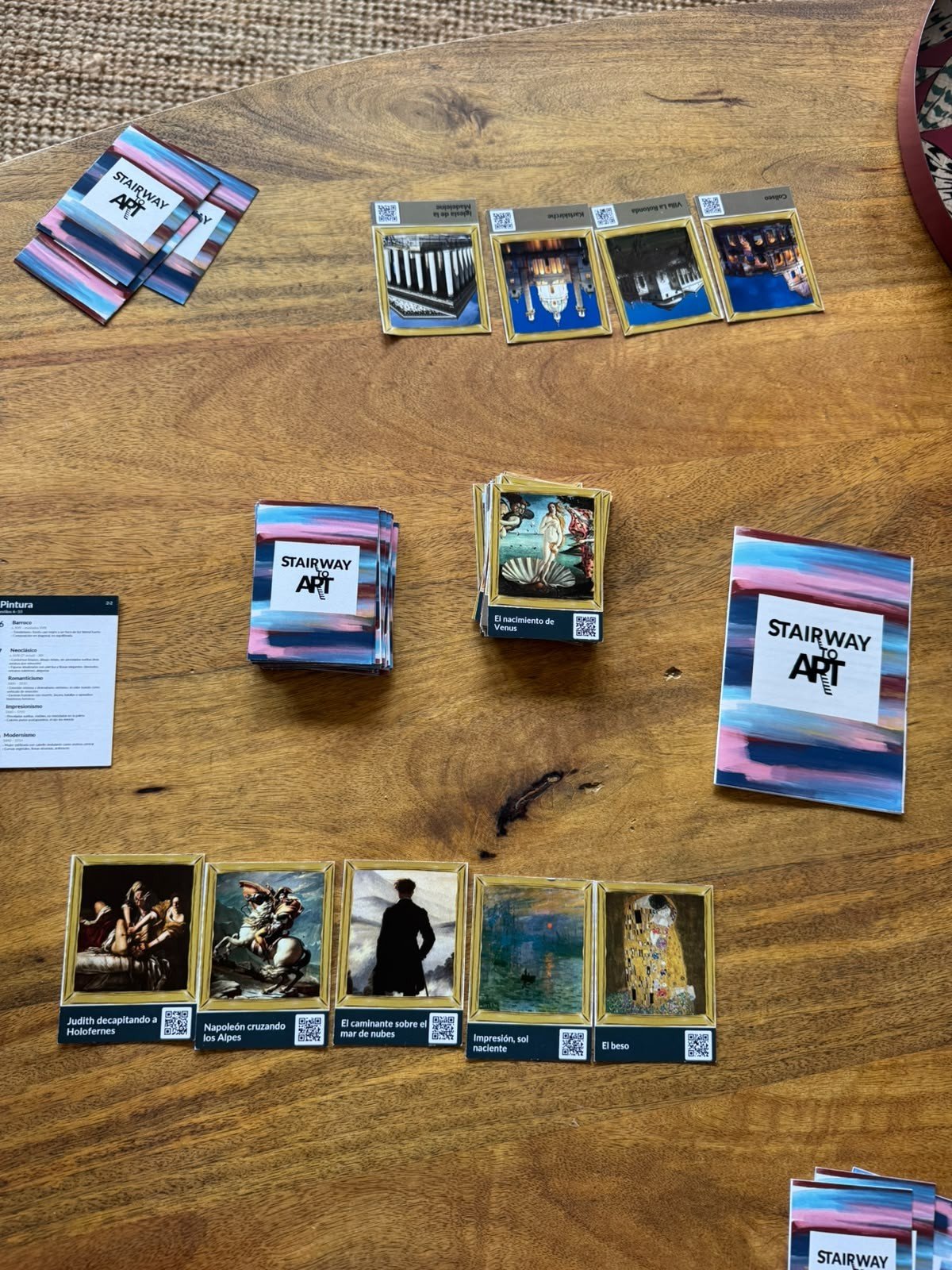
A card game where you build a chronological stairway of artworks: 5, 6 or 7 cards in a row, all from the same category (painting or architecture). First to finish it wins.
Here is the good part: the cards show the image and the title. No artist, no date, no style. You have to work out whether what you are holding is Baroque or Romanticism just by looking at it. And you are not on your own: the help cards carry the visual clues for every style, to check whenever you like.
There are 17 special cards that break the rules in their own way (The Forger, British Museum, Iconoclasm, The Self-Taught Restorer…), so no two games feel the same.
Every card has a small QR code in one corner. When the game is over you can scan it and read the card for that work: artist, year, context, something worth knowing. Phones stay off the table while you play.
Why this game
I have always liked art. There were always books at home, postcards from exhibitions, trips to museums and conversations about paintings, churches and cathedrals.
My mother studied art history when I was small, and some afternoons she took me along to her classes. I sat at the back, listened to the lecturer without understanding much, and spent the time looking at the works on the screen. This game comes from those afternoons.
A lot of art history classes turn into lists of dates, artists and movements. The part that matters, learning to look, gets left out. This game is my small attempt at making room for it.
After a few games you start noticing things you used to walk past: a pointed arch, a hard shadow, a façade that is too neat to be medieval. I like that.
Who is behind it
Two friends. Me, Sergio Villanueva, a software engineer from Valencia who loves art: the rules, the choice of works and this website are mine. And Juli Burne, a graphic designer as taken with art as I am, who signs everything you can see: illustrations, box, logo and manual. Her lifelong dream is to sell something in a museum shop, and we are working on it.
The 103 paintings and buildings come from Wikimedia Commons, all under licences valid for commercial use (public domain, CC0, CC BY). The game is printed at Ludotipia, in Toledo.
While the print run is on its way, there is plenty to look at:
- The 103 works in the game, one by one.
- The full rules and the 17 special cards.
- The checker (scan the QR of any card in the catalogue and you will see how it works during a game).
- The clues for recognising each style.